__largepreview__.webp)
The Need of The Flock
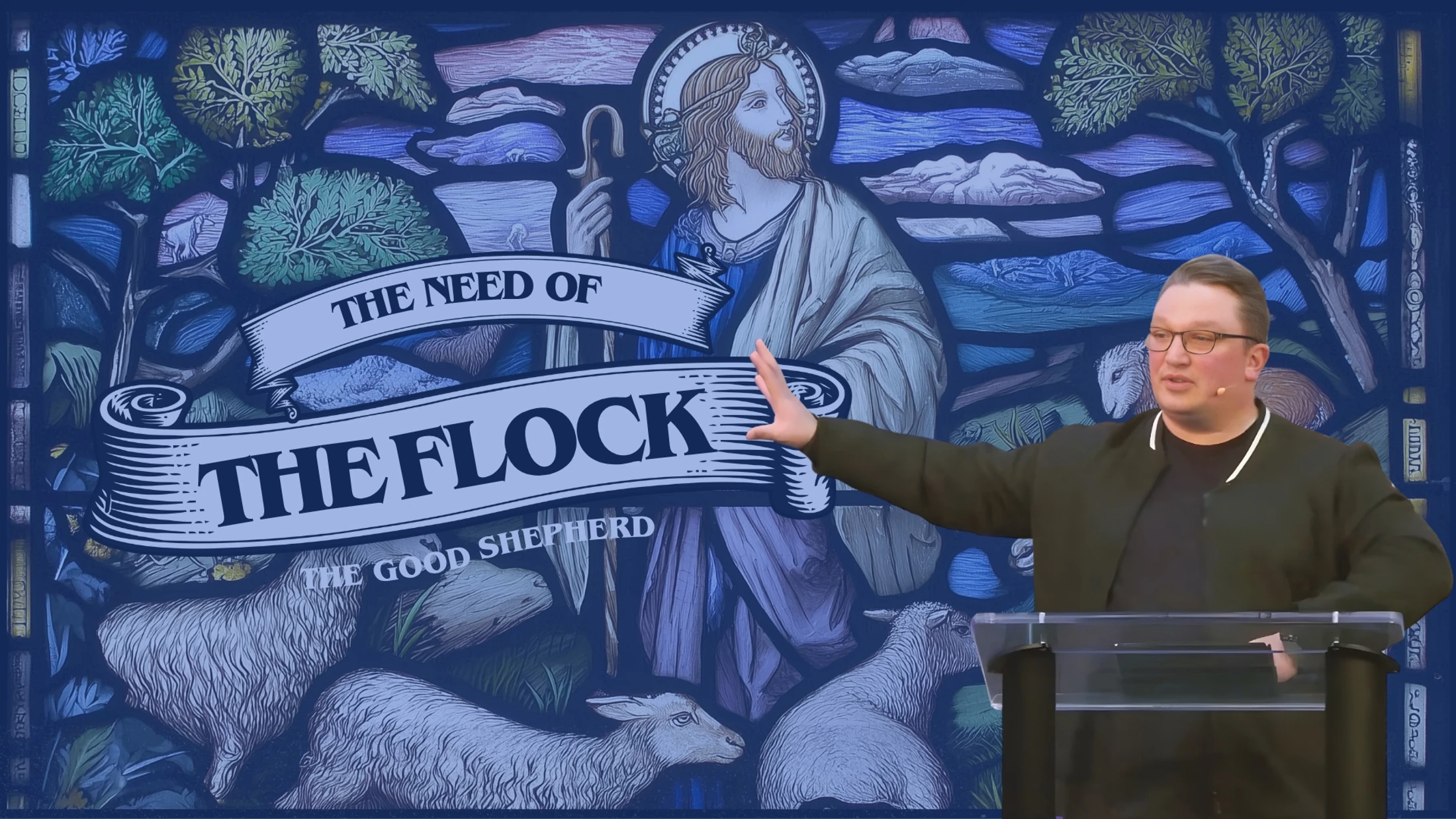
The Good Shepherd Sees You: What Jesus Teaches Us About Compassion, Prayer, and the People Around Us
It is easy to get so locked into our own lives that we walk right past hurting people without ever noticing them. Work, family, bills, schedules, and stress fill every corner of our attention. But Jesus modeled something completely different, and Matthew 9 gives us a clear picture of what it looks like to truly see people the way God does.
Why Do We Miss the People Right in Front of Us?
Most of us are not indifferent to people because we do not care. We miss them because we are exhausted, distracted, and carrying our own weight. Busyness has become a badge of honor in our culture. Someone asks how you are doing and the automatic answer is "busy." But that is not how you are doing. That is just what you are doing.
We sit beside burdened people. We work with spiritually confused people. We live near people who are far from God. And we often do not see any of it because we are moving too fast.
The people around us are not interruptions. They are people God is placing in our lives on purpose.
What Did Jesus Actually Do When He Saw People in Need?
Matthew 9:35 gives us a clear picture of how Jesus operated:
"Jesus traveled through all the towns and villages of that area, teaching in the synagogues and announcing the Good News about the Kingdom. And he healed every kind of disease and illness." - Matthew 9:35 New Living Translation (NLT)
Jesus did not wait for hurting people to find Him. He went to them. He went to the places where people lived, worked, worshiped, struggled, and suffered. He moved toward the need rather than away from it.
What Were the Three Parts of Jesus' Ministry to People?
Matthew highlights three distinct things Jesus was doing as He moved through towns and villages.
1. Teaching: Jesus Cared About What People Understood
Jesus wanted people to know the truth. He did not just want people to feel something. Feelings have to lead somewhere. Teaching grounds us in who God actually is and what He has done.
2. Preaching: Jesus Cared About Commitment
Preaching is different from teaching. The good news of the kingdom is not just information to absorb. It is news to respond to. Jesus did not leave room for spiritual indifference. He called people to go all in or not at all. That is a hard truth, but it is what the Scripture says.
3. Healing: Jesus Cared About Wholeness
Jesus did not look at broken people and say that getting them to heaven was all that mattered. He stepped into sickness, pain, and suffering with the power of God. His miracles were not just impressive moments. They authenticated His message. They showed that His words carried real power to change real lives.
What Does It Mean That Jesus Had Compassion on the Crowds?
"When he saw the crowds, he had compassion on them because they were confused and helpless, like sheep without a shepherd." - Matthew 9:36 New Living Translation (NLT)
This verse shows us what was happening inside of Jesus. He was not stoic or emotionally detached. He felt deeply. He did not respond to the crowds with frustration, irritation, or superiority. He was moved with compassion.
The word "distressed" in this passage means harassed, burdened, confused, and worn down. These were people who had been spiritually beaten down by the very leaders who were supposed to guide them. Religious leaders had placed heavy burdens on people instead of shepherding them toward God.
The word "downcast" carries the idea of being thrown down, a picture of deep mental and spiritual dejection. These people were not just tired. They were beaten. They were not just wandering. They had no shepherd.
Jesus looked at all of that and His heart moved with compassion. Not pity. Not irritation. Deep, genuine mercy.
How Does Jesus See People Differently Than We Do?
There is a real contrast between how Jesus sees people and how we often see them.
- We see people as interruptions. Jesus sees them as sheep who need a shepherd.
- We see brokenness and get irritated. Jesus sees brokenness and moves toward it.
- We see a crowd and feel overwhelmed. Jesus sees a crowd and feels compassion.
- We sometimes demonize people we disagree with. Jesus sees people the enemy is working on and moves toward them anyway.
If we are going to follow the Good Shepherd, we cannot just admire His compassion from a distance. We have to let His compassion reshape the way we actually see people.
What Is the Harvest and Why Are the Workers Few?
"He said to his disciples, 'The harvest is great, but the workers are few.'" - Matthew 9:37 New Living Translation (NLT)
The harvest represents people who do not yet know Jesus. And the problem Jesus identifies is not that people are uninterested. The problem is that there are not enough workers willing to step into the field.
There is a difference between a spectator and a worker.
- A spectator sees the need. A worker steps into the need.
- A spectator has opinions. A worker has obedience.
- A spectator watches the harvest. A worker enters the field.
Compassion is not just a feeling. It has to become action. It is possible to fully agree that people need Jesus and still never help anyone find Him.
Why Does Jesus Tell His Disciples to Pray Before He Tells Them to Go?
"So pray to the Lord who is in charge of the harvest; ask Him to send more workers into His fields." - Matthew 9:38 New Living Translation (NLT)
Before Jesus ever sends His disciples out, He tells them to pray. His first command is not "go." It is "pray." That is not what our action-oriented instincts expect, but it is exactly what He says.
The word "earnestly" here carries a sense of urgency. James 5:16-17 uses the same idea:
"The earnest prayer of a righteous person has great power and produces wonderful results. Elijah was as human as we are, and yet when he prayed earnestly that no rain would fall, none fell for three and a half years!" - James 5:16-17 New Living Translation (NLT)
Earnest prayer is not powerful because the person praying is impressive. It is powerful because God responds. Elijah was not a spiritual superhero. He was a regular human being who brought a burden before the living God.
What Does Earnest Prayer Actually Look Like?
In 1 Kings 18, Elijah bowed low to the ground with his face between his knees and prayed. He sent his servant to look for rain seven times before a small cloud appeared on the horizon. He did not give up. He kept praying and kept looking, even when nothing was visible yet.
"Then Elijah said to Ahab, 'Go get something to eat and drink, for I hear a mighty rainstorm coming!'" - 1 Kings 18:41 New Living Translation (NLT)
Earnest prayer keeps looking even when nothing is visible yet. It is not panic in public. It is surrender in private. When we surrender to God in private, He gives us the power to do what He calls us to do in public.
God wants to do something in you before He does something through you.
Who Are the Workers We Should Be Praying For?
When Jesus says to pray for workers, He is not asking us to pray for mysterious strangers to appear. The workers are largely already here. They are the next generation. They are the children and young people already in our communities and churches who will rise up as leaders. They are the people sitting in the seats right now who have not yet stepped into what God is calling them to do.
Pray for them. Parent with that in mind. The people who seem too young or too small to matter right now are the ones who will carry this forward.
Life Application
This week, choose one person in your life who is hurting, confused, or far from God, and intentionally move toward them. It does not have to be a big conversation. It might be a text, a lunch invitation, or simply slowing down enough to actually ask how they are doing and mean it. Pair that action with earnest prayer. Before you speak to the need, stand before God and ask Him to move in that person's life and to give you the right words and the right heart.
Ask yourself these questions as you go into the week:
- Am I living as a spectator or a worker when it comes to the people God has placed around me?
- When I see someone who is struggling or broken, is my first response compassion or irritation?
- Am I spending time in earnest prayer before I try to act in my own strength?
- Is there someone in my life right now that God has been nudging me toward, and have I been too busy or too distracted to notice?
Jesus did not wait for hurting people to find Him. He went to them. If we are going to follow the Good Shepherd, we have to be willing to do the same.